
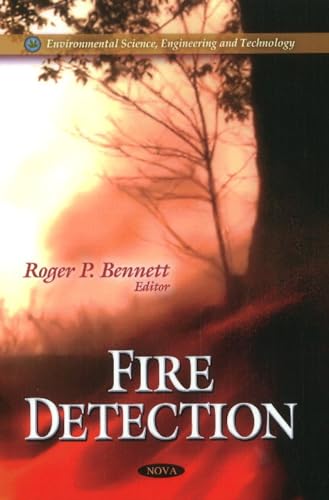
Fire detection / By Roger P. Bennett.
Material type: TextPublication details: New York: Nova Science Publishers, 2011.Description: x, 199 p. : ill.,; 27 cmISBN:
 - 9781611220254
- DUCE SD421.375 .F57
| Item type | Current library | Collection | Call number | Status | |
|---|---|---|---|---|---|
| Books | DUCE LIBRARY Science: Shelf QP31.2.8363 – ZF11.2.M37 | Science Collection | DUCE SD421.375 .F57 (Browse shelf(Opens below)) | Available |
Includes bibliographical references and index
Fire Detection provides a comprehensive overview of the principles, technologies, and applications involved in detecting fires at their earliest stages. The book explores the science of fire development, including combustion processes and the generation of smoke, heat, and gases, which form the basis for detection methods. It examines various types of fire detectors—such as smoke, heat, flame, and gas detectors—detailing their operating principles, performance characteristics, and suitability for different environments.
The text also addresses system design considerations, including detector placement, sensitivity, reliability, and integration with fire alarm and suppression systems. Emphasis is placed on standards, testing methods, and regulatory frameworks that ensure effective fire detection in residential, commercial, and industrial settings. Additionally, the book discusses challenges such as false alarms, environmental influences, and maintenance requirements.
Overall, the work serves as a technical reference for engineers, safety professionals, and researchers, aiming to improve fire safety through accurate, timely detection and system optimization
There are no comments on this title.